Services / First versions
Small enough to finish, real enough to learn from.
A first version a founder can put in front of users, kept small on purpose so you learn what works while there is still budget to act on it.
- Best for
- Founders with a specific thing they need to find out, and a budget that does not survive a six-month build.
- What it costs
- Fixed price against a written scope, in stages you can stop between. Running costs are kept deliberately small at this stage, because paying enterprise hosting for forty users is a way to lose money slowly.
- How it runs
- Six to ten weeks for a first version that real users can use. The scope moves to fit that window, rather than the window moving to fit the scope.
01 / Summary
The short version
The failure I see most often is not building the wrong thing. It is building the right thing so slowly and so completely that there is nothing left to react with when the first users finally arrive.
So the work starts by naming the one question the first version has to answer, and cutting everything that does not help answer it. Admin panels, settings screens, second user types and the pricing page can nearly all wait.
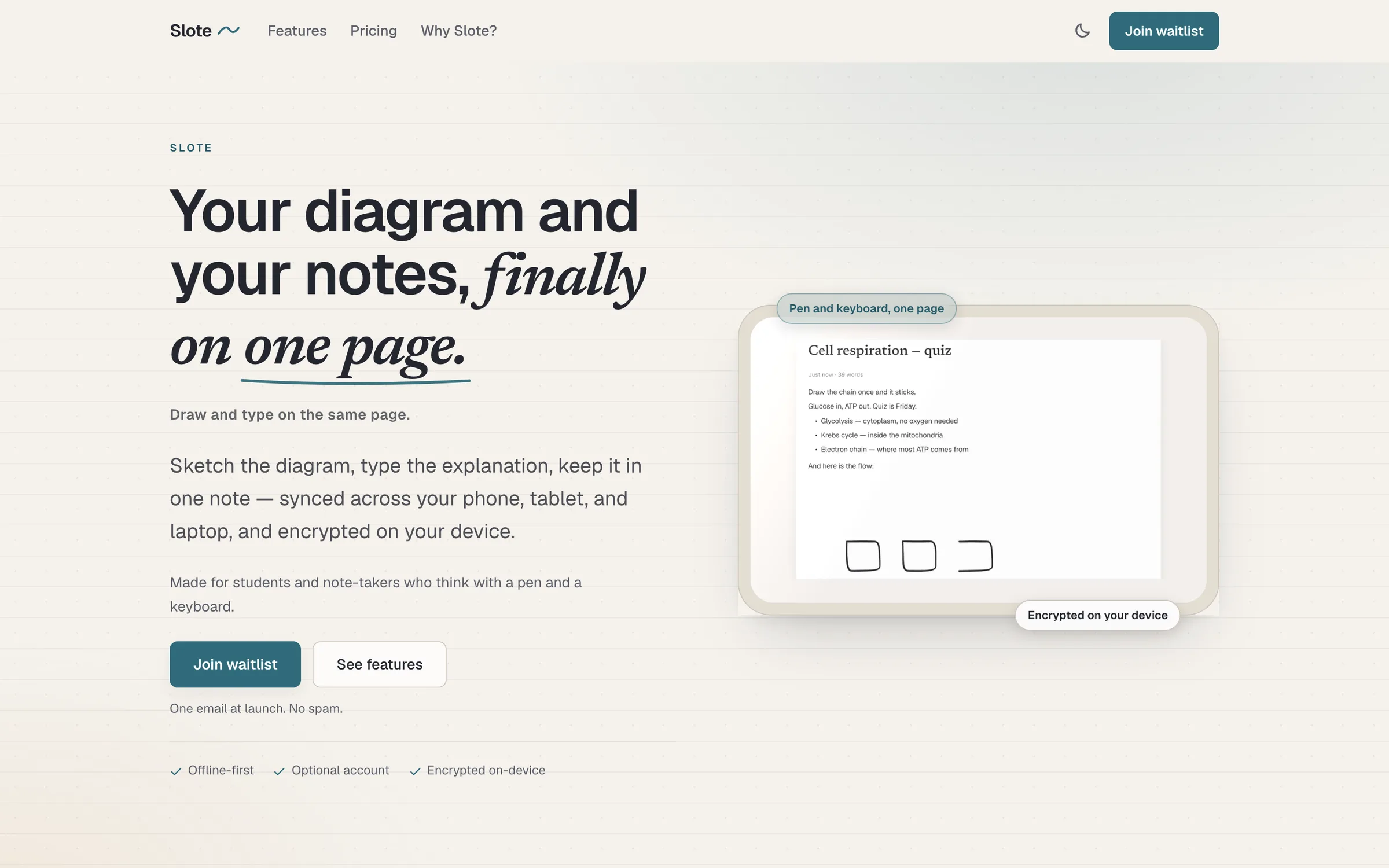
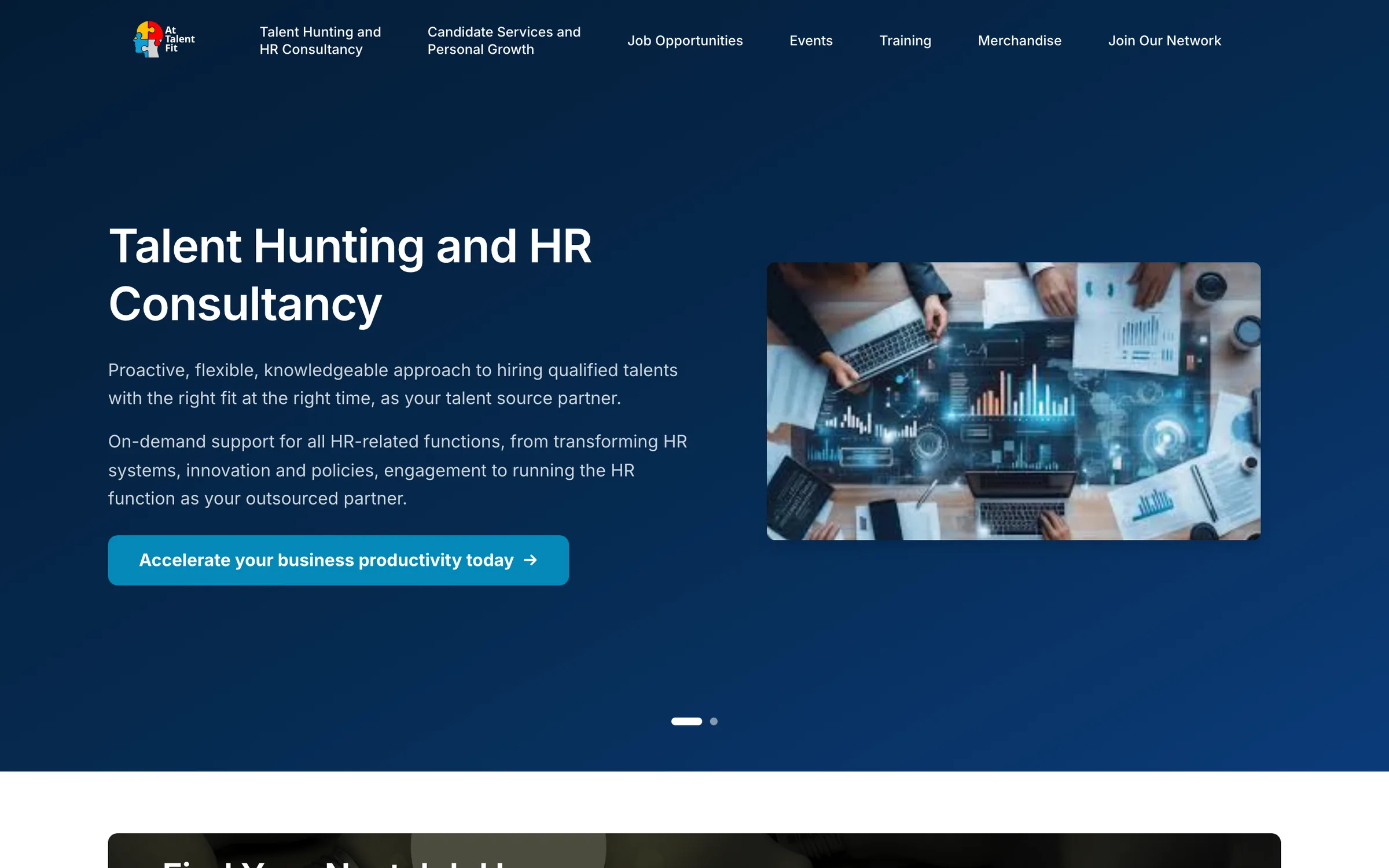
What this is based on: I developed the AtTalentFit website, which we chose to take live before the build was finished and which has been running since 2025, and I am building Slote, a large cross-platform app, end to end. I have not taken a funded client startup from nothing to launch. If you need someone with that specific track record, that is a fair thing to want.
02 / Deliverables
What you get
- 01A written scope naming what the first version deliberately leaves out
- 02A working product on a real domain, not a prototype that only runs on my machine
- 03Authentication, data and the one workflow that matters, built properly
- 04Analytics on the handful of events that tell you whether it worked
- 05Every account in your name from day one: domain, hosting, database, repository
- 06A codebase the next developer can read, whether that is your hire or me
03 / Process
How it runs
- Step 01
Question
What has to be true for this to be worth continuing, and what would tell you it is not.
- Step 02
Cut
The scope that fits the window. This is the conversation that decides whether the rest goes well.
- Step 03
Build
Deployed from the first week. You are clicking through real screens long before launch.
- Step 04
Release
In front of users, with the analytics that answer the question from step one.
05 / Questions
Common questions
01Will you take equity instead of payment?
No. I work on a fixed price, which keeps things simple for both of us, and founders who have paid for a build tend to make sharper decisions about scope.
02What happens when we hire our own developers?
That is the intended ending. The code is written to be handed over, the accounts are already yours, and I will spend time with whoever takes it on. There is no arrangement where you have to keep me to keep the product running.
03Can you build it cheaper with no-code?
Sometimes yes, and if your first version is a form, a payment and a spreadsheet, you can probably build it yourself this month without hiring anyone. No-code stops being the answer when you need real data relationships, an actual login system, or anything a customer would be upset to lose.
04How do we keep running costs down after launch?
By not buying capacity you do not have users for. At early volumes, hosting and a managed database usually cost tens of dollars a month rather than hundreds, and I will tell you the figure before you commit to the stack rather than after the first bill.